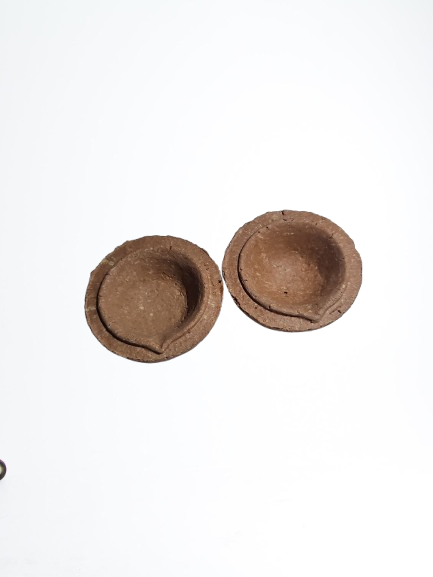
Eco-Friendly Cow Dung Diya
Eco-Friendly & Auspicious: Illuminate Your Home with the Power of Nature.
Explore our premium range of cow dung products, including sambrani cups, dhoop st
Cow dung diya, or cow dung lamps, hold a significant place in traditional Indian culture and eco-friendly practices. These small lamps, crafted from dried cow dung, are commonly used during festivals, religious ceremonies, and household pooja (worship) rituals across the country. Unlike conventional lamps made from clay or metal, cow dung diyas are not only environmentally sustainable but also carry spiritual and health benefits. ### The Material: Cow Dung Cow dung is often viewed as a byproduct of livestock farming; however, its applications extend far beyond being mere waste. In many rural Indian households, it is a valuable resource, utilized for making fuel, fertilizers, and building materials. When prepared properly, cow dung is a biodegradable substance enriched with nutrients, which makes it an excellent choice for creating diyas. ### Crafting the Cow Dung Diya The process of making a cow dung diya is simple and empowering, often involving the entire family. First, fresh cow dung is collected and then mixed with other natural ingredients, such as soil or medicinal herbs, to enhance its properties. This mixture is then shaped into small cups or lamps, often with intricate designs or symbols added for decorative purposes. The diyas need to be carefully dried in the sun, allowing them to harden and become suitable for use. ### Lighting the Diyas: Symbolism and Spirituality Lighting a cow dung diya is more than just illuminating the surroundings; it is steeped in symbolism. Traditionally, the diya is seen as a representation of purity and the presence of divine light. In Hinduism, it is believed that the flame of the diya wards off negativity and attracts positive energy. Often lit during festivals like Diwali, the cow dung diya becomes a beacon of hope, devotion, and reverence. ### Eco-Friendly Benefits As the world grapples with environmental issues, the cow dung diya stands out as an eco-friendly alternative to plastic or chemical-based lighting options. Its biodegradable nature ensures that it does not contribute to landfill waste. By choosing cow dung lamps, individuals embrace a sustainable lifestyle while also promoting the use of renewable resources. Moreover, these lamps support traditional practices that encourage minimalism and a connection to nature. ### Cultural Significance and Modern Usage In today's urban settings, cow dung diyas have transcended their rural origins and garnered attention from eco-conscious consumers. Artisans and craftsmen have begun creating unique designs that cater to modern aesthetics, allowing these traditional lamps to be displayed in homes, offices, and public spaces. This revival not only preserves cultural heritage but also generates income for numerous families engaged in the craft. ### How to Use Cow Dung Diyas Using cow dung diyas is quite straightforward: 1. **Wick Preparation:** A cotton wick should be appropriately placed in the center of the diya, ensuring it touches the bottom to absorb the oil or ghee used for lighting. 2. **Filling:** Fill the diya with natural oil or ghee (clarified butter) as fuel. Ensure not to fill it too much to prevent spills. 3. **Lighting:** Light the wick using a matchstick or a lighter. The flame should be steady and should symbolize the positive aura. ### Care and Maintenance To ensure that the cow dung diyas remain functional and beautiful: - **Storage:** Keep the diyas in a dry place, away from moisture and direct sunlight to prevent them from crumbling. - **Cleaning:** After each use, clean the soot gently with a dry cloth. Avoid using harsh chemicals, as they could negate the eco-friendly advantages of the diya. ### Conclusion Cow dung diyas represent the harmonious blend of tradition, spirituality, and sustainability. By embracing these humble yet profound symbols of light, individuals participate in an age-old practice that respects the environment while nurturing a connection to cultural roots. As we navigate the modern world, incorporating such eco-friendly practices into our lives becomes increasingly essential, aligning our lifestyles with the wellness of the planet and its diverse traditions.