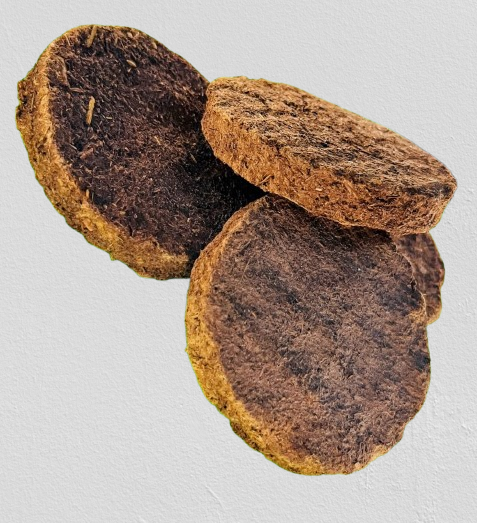
Natural Cow Dung Cake
Cow Dung Cake for Hawan & Pooja
Discover our range of eco-friendly cow dung products, including sambrani cups, dhoop sticks, and dhoop cones. Perfect for spiritual rituals and enhancing your living space with natural fragrances. Our products are manufactured with care and supplied in bulk, ensuring quality and sustainability. Experience the benefits of using traditional materials that promote a cleaner environment. Shop now and bring the essence of nature into your home.
Cow dung cakes, often referred to as cow dung patties, are a traditional and integral part of rural life in many parts of the world, particularly in India and other South Asian countries. These cakes are made from the dried excrement of cows and serve a variety of purposes, both practical and cultural. **Cultural Significance** In many rural communities, cow dung is revered not just as a natural fertilizer but also as a sacred substance. Cows hold a special place in the cultural and religious practices of Hinduism, and cow dung is associated with purity and prosperity. Its use in daily life is not only about practicality but also reflects a deep respect for nature and life. **Preparation Process** The preparation of cow dung cakes typically involves collecting fresh cow dung, which is then cleaned to eliminate impurities. The dung is mixed with a small amount of straw or grass, which helps bind it together and hastens the drying process. The mixture is then shaped into flat patties, often by hand, and left out to dry in the sun. This drying process is crucial as it hardens the cakes, enabling them to be used as fuel. **Uses of Cow Dung Cakes** 1. **Fuel**: One of the primary uses of cow dung cakes is as a fuel source for cooking. In rural households, these dried patties are often utilized in traditional stoves, known as chulhas, providing a reliable and inexpensive source of energy. 2. **Fertilizer**: Cow dung is rich in nutrients, making it an excellent organic fertilizer. The cakes can be crumbled and spread in fields to enrich the soil, promoting healthy crop growth without the use of synthetic chemicals. 3. **Pest Repellent**: Interestingly, cow dung has natural properties that help deter certain pests. Farmers often use cow dung to create barriers around crops, minimizing damage from insects and rodents. 4. **Building Material**: In some regions, cow dung is mixed with clay to enhance the thermal insulation properties of houses, particularly in rural areas where modern building materials may not be accessible. 5. **Religious Practices**: In Hindu rituals, cow dung is often used for the preparation of sacred spaces. It is believed to purify the environment, and cow dung cakes may be used in ceremonies to enhance spiritual significance. **Environmental Impact** Using cow dung cakes as a fuel alternative helps reduce deforestation and the carbon emissions associated with burning wood. Additionally, cow dung provides a sustainable energy source that contributes to a circular economy by repurposing waste from livestock. However, it is essential to ensure that the dung is sourced from healthy animals to avoid health risks associated with pathogens. **Conclusion** Combatting climate change and promoting sustainable practices are at the forefront of global discussions today, and cow dung cakes symbolize an age-old solution that marries tradition with environmental stewardship. These little patties serve not just as a source of fuel but as a representation of an interconnected ecosystem, where respect for animals, culture, and sustainable living coalesce. As communities evolve and modernize, the role of cow dung cakes may change, but their significance in rural cultures remains undeniable.